Selves-Care
Oct 11, 2024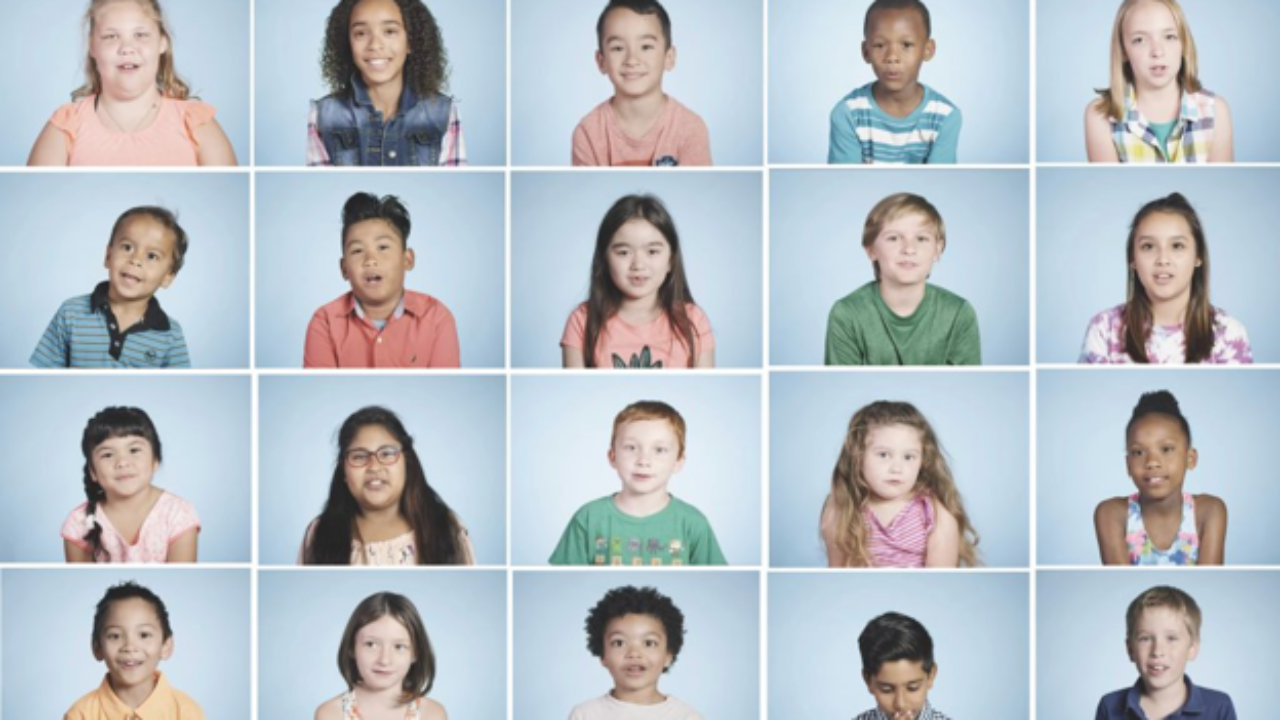
Do you remember how, as a child, you would answer the question, what do you want to be when you grow up?
The kids in this adorable montage mention some of the things they want to be. Wherever their comments fall along the spectrum of silly to serious, they’re fun to listen to.
What I’ve noticed over a lifetime of conversations with young people is that somewhere between wanting to be a princess-fairy-zookeeper and choosing a college major or line of work, most develop some sense of wanting to be of service. Whatever their other motivations, one is to help.
I want to help people. I want to help animals. I want to help the world.
The impulse to direct our caring energy toward others is natural, innate.
A growing body of research confirms the relationship between altruism and well-being and reveals much about the evolutionary and emotional underpinnings of pro-social behavior.
While cultural conditioning can strengthen or suppress it in a people, the inclination is there nonetheless.
At our most recent teach-in, I had a chance to hear from a group of college students about how it’s showing up in their lives. For this annual fall event, faculty devise topics based on the year’s ethics theme. Students choose one that interests them and, over a picnic lunch, we talk in small groups.
This year’s theme is Care. My session was called “Selves-Care” (I don’t think the students who chose it noticed those extra letters).
I kicked it off by asking them to jot down answers to a few questions. One was about their professional aspirations.
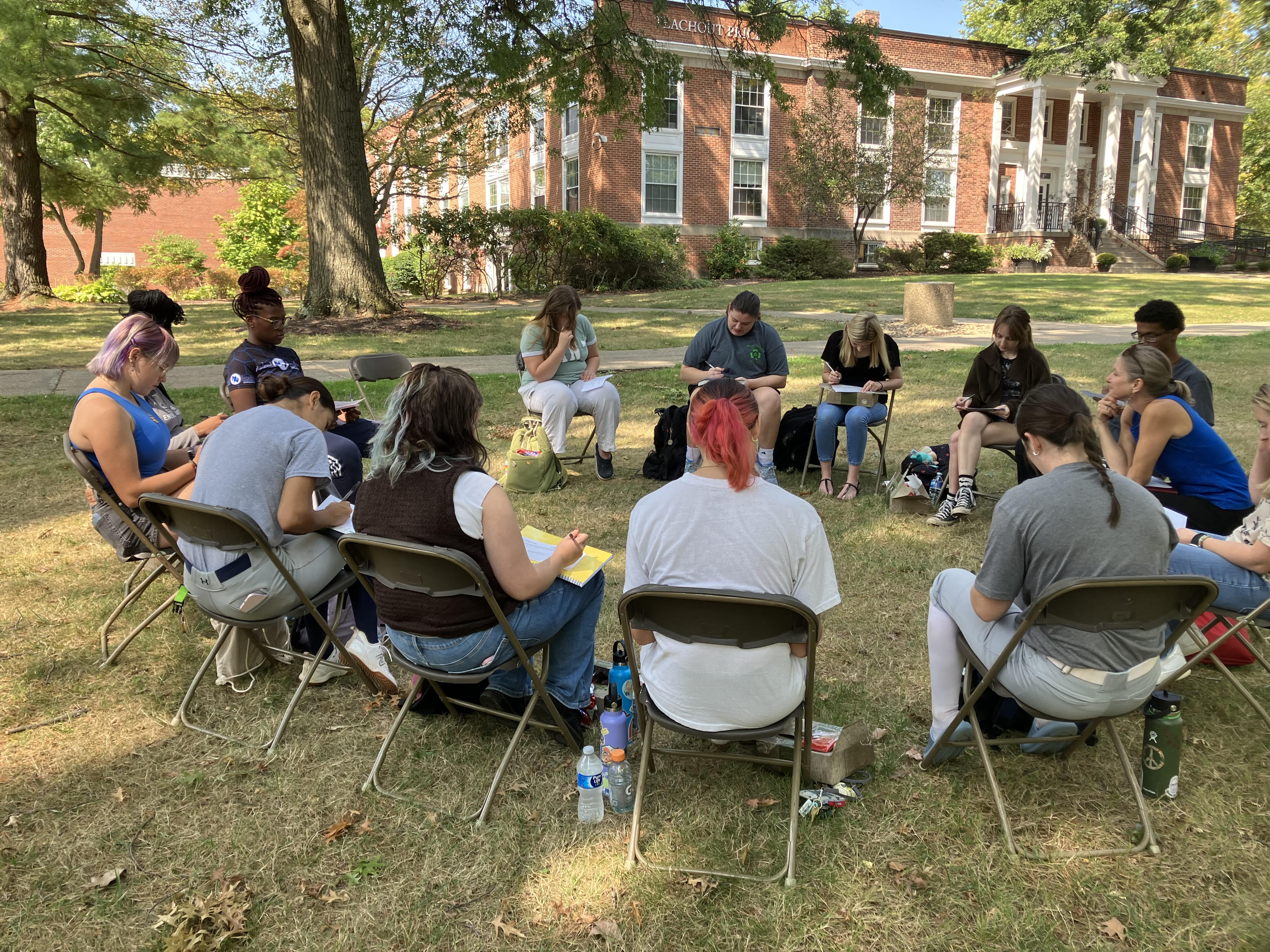
The variety was wonderful. Coroner, child advocate, physical therapist, camp art director, conservation biologist, teacher, a few not sure yets, and more.
A common thread running throughout all their plans was a sense of service, of helping others, of care. It was inspiring.
The discussion then turned to self-care. They’d heard a lot about it. And they all wanted, and felt like they needed, more of it. I was impressed by their self-awareness.
This attention to self-care is important.
It’s a much-needed response to observed troubles in our mental and emotional states, physical health, demanding expectations, allocation of time, chronic stress, and the unhelpful habits related to all that.
Concerns about how these are playing out in young people’s lives are especially acute. There’s no doubt, it’s critical that we learn and teach better ways of caring for our well-being. The sooner the better.
They wanted to dig deeper. So, I asked some questions. First, what is self-care?
Clichés about oxygen masks aside, students reported that everything they hear about it is, not surprisingly, directed at the self. This isn’t necessarily a problem, but could it be? I asked.
Can self-care go wrong? Can it be taken too far?
They paused. Considered. Then one student ventured, “well, it could turn into selfishness.”
Catalyzed by that comment, possibilities seemed to multiply in their minds. Taken to excess or in the wrong direction, they offered, it could lead to:
- ignoring others’ needs
- shirking responsibilities when you don’t feel like showing up
- taking superficial actions that don’t reallyamount to caring for yourself
- missing opportunities in the effort to avoid discomfort
- not developing the skills you need to achieve your goals and so, never achieving your goals
Now things were getting interesting. I followed up.
Where’s the line?
Between self-care and selfishness? Between actions that matter and those that don’t? Between taking a needed rest and taking the easy way out?
They looked surprised. In all the talk of self-care, everyone agreed, they’d never heard questions like these asked.
This is a lost opportunity. Thresholds like these are critical to explore.
For one thing, anything we do—exercising, working, studying, relaxing—taken to excess can turn into a problem. It’s crucial to help young people discern the boundaries between a good thing and too much of it, or something that’s not so good after all.
Then there’s the fact that our fixation on self-care so far doesn’t seem to be producing the results we want: happier, healthier people. Inquiring minds might wonder why. A good place to start is by examining the assumptions at work here, starting with the most fundamental.
What is the self?
As with a math problem, if we make a mistake early on, everything we do from there will be off.
This seems to be at least part of our problem. In the society I grew up in, it’s mostly taken as a given that the self refers to an individual person, a separate, independent, self-existent entity. Even if some of us technically know better, this is the mental picture we have. It just feels true.
What we forget, or never knew, is that this question gets answered in vastly different ways across time and place. There are wide fluctuations, for example, in what sociologist Norbert Elias calls the We-I balance (the degrees to which individuals identify with and are identified by their own traits versus larger contexts).
At this time and in this place, there is no question that our scale tips heavily toward the ‘I.’* In my imagining of it as an old-fashioned balance scale, the I-side appears to have crashed to the ground, sending the We-side so high up we don’t notice it. Unless we look.
When we do, it’s easy to see that our ideas about the separate, independent, self-contained self are just plain wrong.
Please don’t misunderstand. I’m not saying there is no such thing as a self. You and I most assuredly exist. What is at issue is how.
There is no such thing as a self apart from others.
There’s plenty of wisdom, ancient and modern, making this clear. But it hasn’t yet infiltrated our ways of thinking, and so bears repeating.
Everything about our self—our physical body and what sustains it, how we see and think about the world, what we do and why, to name a few key dimensions of our lives—is a dynamic process happening via interdependent relations with countless others, human and non.
Whatever shifts may occur in our perception of self, this reality is unchanging.
It’s not hard to grasp, or to teach. Though, the more conditioning one has in an individualistic culture, the more unlearning there is to do. But it’s totally worth the effort and, I argue, necessary.
It’s in our (and everybody’s) best interest to get clearer on what we really are.
Consider, for example, the benefits of our rapidly developing understanding of the microbiome—the diversity of the 10-100 trillion non-human cells making up more than 90% of our body. In recent decades, the research has made clear that our health depends largely on theirs. We’re beginning to appreciate the harm we do to our selves when we harm the integrity and balance of the overall ‘me-cosystem.’
Or take the tremendous insights we’ve gained into the ways that social and cultural conditioning shape our brains. Knowing more about how our dynamic neural networks work, how we learn from and influence others, the ways we attend to the world and the far-reaching effects of that on what we see and do are just a few examples of this empowering knowledge.
Or look at the burgeoning research on the benefits of kindness, altruism, and care which consistently affirms their importance for our quality of life. We derive benefits not only in receiving but also giving. These, along with empathy, awe, and other ways of feeling part of something bigger, have been shown to have positive effects on physical and mental health, social relationships, and overall happiness.
This logic applies at the collective scale too: to ecosystems and the biosphere, shared knowledge and ways of knowing, cultural values and common purpose.
When we really understand our selves as interwoven with countless others in a much bigger web, we experience a major shift in perspective. From here, we can see that real self care is actually “selves care,” care for you and countless others (one of which, by the way, is your future self).
Along the lines of Aldo Leopold, and so many others who recognize the need for a change in how we think, I too view it as “an evolutionary possibility and an ecological necessity.” [1]
Genuine well-being depends on this more accurate sense of self.
What we call the self is inherently and inescapably interdependent—both with the world it develops in and within itself, among the parts making up the whole. These get talked about in different ways; I use a familiar breakdown here.
- body: the health of our body’s systems and how we feel physically
- mind: what we know, how we think and see, our experience of mind
- spirit: the senses of meaning and purpose which guide our lives
They necessarily co-operate such that the health of one affects the health of all. Ideally, caring for our well-being means integrating and caring for all aspects of our being.
Admittedly, that’s a tall order. Many of us would settle for “simply” feeling better. I use quotes here as a nod to the fact that this goal is neither simple nor insignificant. Feeling better is no small thing at a time when we feel so unwell in so many ways in such great numbers.
This helps explain why the lion’s share of attention has been given to basic self-preservation and individual stress-reduction. It’s a crucial first step, but as psychology researcher Dacher Keltner observes:
“That’s remedial, and we need more …
We have a crisis of meaning. What are the big things that I need to care about and relate to and orient my life toward?” [2]
For well over a century, wise observers have been pointing out our crisis of meaning. As it worsens, their numbers grow and their collective voice gets louder.
In an online conversation with Dougald Hine, one such cultural commentator, I remarked on the trickiness of efforts to deliberately create new cultures.
The British-Swedish author and social entrepreneur offered a characteristically gentle and generous response. Part of recognizing where we’re starting from, he said, is:
“to give ourselves permission to be in remedial class, to needing scaffolding or forms of assistance that are a bit clumsy, but that might help us move in a direction that has life in it.” [3]
In reflecting on this, I realized that ultimately this is permission we must grant ourselves.
So, what does all this mean for you and me?
Knowing that if we’d been born into a world where we learned these things more naturally, we wouldn’t be as clumsy…
Knowing that learning is often awkward and uncomfortable…
Knowing that this process takes time…
we can let ourselves off the hook of needing to get it right, to be perfect from the start, or ever.
At the same time, it means not letting ourselves off the hook altogether. Not retreating into the small separate (false) self when things feel unpleasant or hard.
Of course, knowing what we are won’t solve all our problems. It doesn’t provide a foolproof set of instructions telling us exactly what to do at any given moment.
It does, however, orient our attention and actions in essential ways. As we stumble through this remedial phase, it helps to have confidence that we’re heading in the right direction.
Movement down this path of selves-care is the key to finding the meaning and purpose we not only crave, but need as humans.
As our youthful aspirations demonstrate, we come equipped with the necessary raw material. Our work then as parents, educators, leaders, and selves is, first, not to squander or degrade that precious resource and, second, to protect and cultivate it.
To do this work well, we need to be willing to learn new ways of seeing and being. To be beginners. To delight in and take seriously our impulse to help. It may not always feel easy, but we can take a lesson from the youngest among us.
Notes and References
*I discuss this further here and here, available for free at most university libraries, or any library with a Springer subscription.
[1] Leopold, Aldo. 1987 [1949]. A Sand County Almanac. New York and Oxford: Oxford University Press. Page 203.
[2] Keltner, Dacher. 2023. “The Thrilling New Science of Awe.” On Being with Krista Tippett podcast. February 3. https://onbeing.org/programs/dacher-keltner-the-thrilling-new-science-of-awe/
[3] Hine, Dougald. 2023. “Regrowing a Living Culture,” online sessions at A School Called Home. November 6.
Feature image: Collage created by the author using the public video linked above.