An Antidote to Too Muchness (+ a new direction for my work)
Aug 23, 2025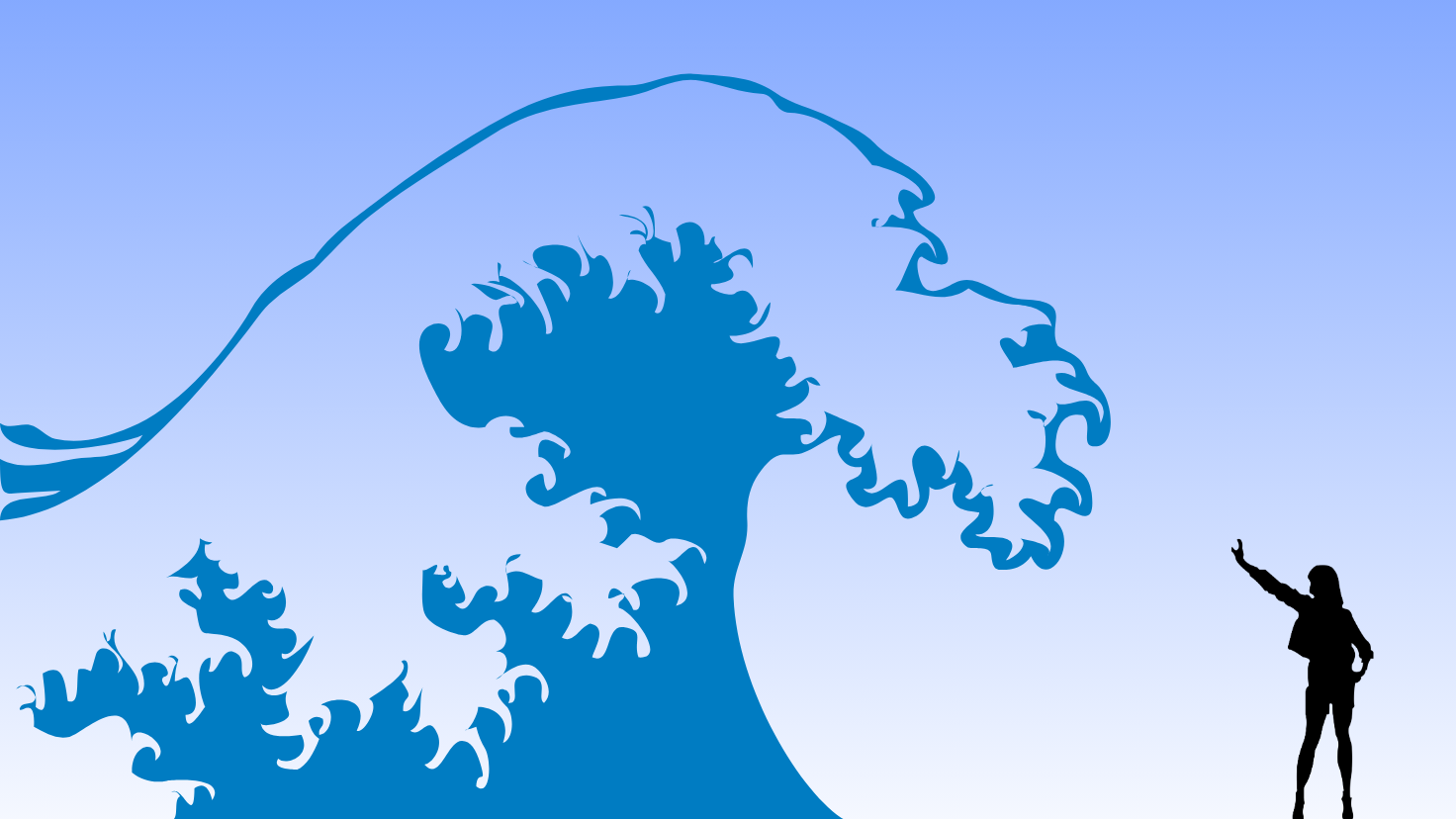
Virtually everyone feels it at times, the sense that it’s all just too much.
In those moments, the better we understand what’s happening and the more familiar we are with its patterns, the easier it is to deal with.
As far as I can tell, there are three main causes of our too muchness. They can work independently or in combination.
Individual inclination. There’s the tendency toward too muchness some of us come equipped with out-of-the-box, the result of innate features which seem to multiply and amplify incoming stimuli. That’s me. For as long as I can remember, the sense of too much in terms of what I was seeing, thinking, feeling, knowing, and doing has been a pretty regular occurrence. From early on I knew it made me a bit weird, but try as I might I couldn’t wish it away.
Extreme states. There’s the more universal kind of too muchness that comes from feeling like we’ve hit our limits. Sometimes it happens in a ‘good’ way, like when we’re bursting with love, appreciation, or awe. Our cups runneth over. Other times, it’s far less pleasant. In times of crisis, we can reach breaking points, feel the weight of last straws, think we can’t possibly go on. We pray this cup may pass us by. As with all things, the moment eventually passes.
Social conditions. Finally, there’s a too muchness that’s collective in nature. It’s the product of certain developments in the shared material and social conditions of a people in a given time and place. This is the sort of too muchness so many experience today, but few understand. And the not understanding only makes things worse.
As with an illness, experiencing symptoms without knowing what’s causing them can increase our suffering. Additionally, without a sound sense of root causes we can’t effectively address this or other pressing problems, so they persist and worsen.
For our individual and collective good, therefore, it’s critical that we get a better handle on what’s going on.
Our Collective Too Muchness
Innate propensities and extreme states aside, we’re all susceptible to the effects of the too muchness that characterizes life in modern societies. (Except for maybe Wendell Berry, one of my heroes who, as far as I know, still doesn’t use a computer.)
There’s a broadly salient sense today that there are simply too many choices, too much to do, too much stuff, too much news, too much to see and know, and too much of so many other things. To make matters worse, in practice too much often actually means endless.
Take, for instance, the endless streaming options, scrolling, and rabbit holes which await any user of digital media. But we can’t pin it all on the tech. Although the technology is novel, this sense of endlessness is not completely new. Consider the quantities of printed texts available throughout history. From the Library of Alexandria to the Library of Congress, the number in existence, relative to the amount of time any one person has to read them, might as well be infinite.
The point: infinite anything is liable to overwhelm a finite being in a finite world. Indeed, that seems to be exactly what’s happening.
In many societies today, chronic overwhelm is endemic.
Because we experience it in unique and deeply personal ways and because, more often than not, authorities individualize and medicalize its effects, it’s not surprising that we mostly view this kind of too muchness as a purely personal problem.
Trends suggest otherwise.
- In a recent annual poll, over a quarter of American adults said they felt so overwhelmed by stress they couldn’t function. [1]
- In a UK study, 74% of adults reported feeling overwhelmed and unable to cope with life. [2]
- On a days-per-month basis, young people in the US feel overwhelmed more than half the time. [3]
Numbers like these help us appreciate how widespread the problem of too much is. If we can also imagine the material conditions corresponding to it (e.g., too much consumption, too much pollution, too much growth demanded) we can also begin to understand the troubles it’s causing in the wider world.
Socio-environmental studies, the interdisciplinary field I work in, focuses on troubles like these. The quantity of relevant information and knowledge is diverse, huge, and growing bigger all the time.
So it is that we run into a particular instance of this third type of too muchness.
Too much to know
It’s always been the case that data is everywhere, constantly streaming into our sense fields. For humans, apart from some unconscious physiological signaling, most of that data is unintelligible until we process it into meaningful information. We’re always engaged in meaning-making processes, not only as individuals, but at social levels too.
The advent of modern science (a method of systematic observation and experimentation through which we can reliably know the world beyond what’s possible from our singular vantage point) sparked an information explosion such that our social stock of knowledge has grown exponentially.
So far, the energy of analysis has dominated. This approach, trying to learn about things by breaking them up into ever more and smaller pieces, has gotten us far!
But if the resulting proliferation of information and knowledge is not balanced by sufficient momentum in the other direction of synthesis—of putting things together and integrating parts into wholes—we end up losing ground. Quantities become unwieldy. The expansion of knowledge reaches a point of diminishing returns. We forfeit understanding.
This was the subject of my book, Beyond the Knowledge Crisis. In it I showed how these concerns, going back centuries, have only become more urgent. Today we can barely know what we know, much less effectively use it in the ways our times are calling for.
Our responses to TMI tend to take one of two forms.
We try to stop the flooding by cutting off certain information flows. Maybe we avoid news, eschew science, or shy away from certain conversations. This can offer temporary individual relief and may at times be necessary, but doesn’t address the real problem.
Alternatively, we double down on the quest for more knowledge, assuming that if a little is good, more is better. This hasn’t worked either, as thinkers like David Orr have long pointed out. For, even as our knowledge grows,
“we are becoming more ignorant of the things we must know to live well and sustainably on the earth.” [4]
How can we counter the too muchness that keeps us from knowing what we most need to know to live well in this world?
Synthesis provides an antidote.
As an alternative to the proliferation of disciplines, subdisciplines, and ever narrower specializations that only makes it harder to communicate and collaborate, I’ve proposed a simpler way of organizing what we know according to levels of phenomena.
Social
Biological
Physical
They’re hierarchical in the sense that phenomena at one level emerge from, operate in, depend on, are shaped by, and help shape those which it subsumes. Each emergent level is inseparable from the rest; it’s also sufficiently different in ways that constitute a distinct category. [5]
With respect to the problem of too much to know, this framework is invaluable for a few reasons:
- This depiction of emergent phenomena is more congruent to reality than the usual way of organizing knowledge into “buckets” of subject matter arbitrarily side-by-side.
- The more accurate mental picture it gives us lends itself to the kinds of integrative understandings we so desperately need.
- It offers a parsimonious way not only to accommodate but also contextualize growing quantities of information.
I can attest that this approach has proved indispensable in the classroom (as I wrote about years ago.) Like a sturdy set of shelves, I’ve seen the way it gives students a place to put what they’re learning, making it easier to organize, access, and use it when they need it.
I’ve also seen that it’s not enough.
However elegantly organized, information and knowledge alone won’t cut it.
This is especially true in my field where there are lots of hard-to-swallow facts, a steady stream of bad news, and plenty of fear-provoking projections. In this context, students need more. We all do.
- We need help processing what we know and the feelings it brings up.
- We need help understanding its implications for ourselves and others.
- We need help figuring out what to do with all that, how to best act on it.
In short, we need help exploring and discerning what it all means.
This need is a natural result of the overall lack of support in these undertakings many feel today. Some simply call it our “crisis of meaning.”
We need meaning.
For us humans, meaning is non-negotiable. It’s the fifth dimension we uniquely occupy, as German sociologist Norbert Elias brilliantly put it. [6] We rely on meaning constantly, in ways mundane and profound.
Talk of a crisis refers mostly to the latter, to our understanding of what things mean in a deeper sense—with regard to ethics, morality, wisdom, purpose, and other ways of understanding the reasons behind what we do or don’t do, will or won’t do.
Beginning centuries ago, our individual and collective sense of meaning—our sense of why—seems to have eroded in inverse proportion to expansions in the possible what’s, who’s, when’s, where’s, and how’s of life. The very stuff of our collective too much.
In turn, this particular form of not enoughness exacerbates the effects of our too muchness.
This crisis has been periodically brought to the surface in works of philosophy, fiction, memoirs, social and psychological study, and other descriptions of existential angst observed and experienced.
It shows up in socio-environmental studies too. In ecology, for instance, Aldo Leopold famously discusses the need for an ethic to govern our dealings with the land. In economics, thoughtful people highlight the consequences of an economy without morality and bother to ask why questions such as, what is GDP for? In education, people like Orr warn of the dangers of information and knowledge unaccompanied by wisdom.
Works like these are, in a phrase, investigations of meaning. And they all conclude the same thing: we need more of it.
How to seek and find more meaning
When it comes to matters of why? and specific questions like how to process what we’re learning, how to understand what it means for us, and what to do in response, the sciences can only take us so far.
That’s not a problem; it’s not their purview. Fortunately, they’re not the end of the line. There’s a treasure trove of resources to help us explore these and related questions.
We need only expand our range a bit more to include one higher level of synthesis.
Reconfiguring the above levels—combining some and teasing apart others—renders an equally simple framework, but one that’s even more powerful for exploring the oh-so human dimension of meaning.
Cultural
Social
Biophysical
The level of culture (the accumulation of a people’s values, beliefs, symbols and language, norms, and the material stuff which reflects and reinforces all that) is the level of meaning. It emerges from, and is a distinct expression of, the social and biophysical conditions it operates in, depends on, is shaped by, and helps shape.
In more colloquial fashion, some describe culture as the spirit of a society.
I like this way of putting it.
It makes sense to me as I understand spirituality: the human impulse to wonder, to ask why, to follow our natural desire to pursue understanding and meaning of the profound sort. We find collective expression of this impulse and supports for pursuing it at the level of culture via philosophy, myth, religion, art, ritual, and so on.
Also, it elucidates a helpful parallel. This simple framework loosely represents a collective counterpart to one familiar trifecta of body/mind/spirit as a way to think about the distinct but inseparable dimensions of a person.
- Culture, the level of shared meaning, constitutes collective spirit.
- Through social relational structures we come to know the world and form shared knowledge and understanding, or collective mind.
- Biophysical conditions comprise our collective body.
Of course, these operate in a multiplicity of ways at different scales and I don’t want to make too much of it. Nonetheless it provides a helpful mental model.
There’s more to say about all this, lots to qualify and explain, but that’ll have to wait for another time.
The point here is that certain cultural phenomena serve as efficient ways to contain and convey large quantities of information and knowledge. They’re the social equivalent of nutrient-dense superfoods.
I’m not suggesting that studying artifacts of culture can substitute or replace knowledge at other levels, only that some can provide a fast track to grasping the meaning of those.
Evoking the experience of your ‘cup running over,’ for example, as I did above, brings instant and visceral clarity in contrast to explanations of the combined workings of the neuroendocrine system, oxytocin and dopamine flooding, reduced activation of the default mode network, and empathic functions, and such. Our brains love a good metaphor.
And vice versa, other sorts of knowledge can inform and enrich our understanding of timeless meanings and metaphors.
Given the juxtaposition of our unlimited need for understanding and meaning alongside our strictly limited time and bandwidth, this is invaluable. Today more than ever.
Beyond just efficiency, including this level also gives us a more holistic approach to pursuing the kinds of knowledge, understanding, and wisdom circumstances demand.
Best of all, making room for regular exploration of and engagement with questions of meaning and purpose at this level of synthesis aids us in dealing with any of the forms of too muchness that might plague us. (I know I’d be sunk without it.)
Including Culture, Inviting the Spiritual
Bringing these explorations into the conversation means making room for and taking seriously the many cultural supports for our quest to know why and what for, aids in our search for meaning and purpose. Among other things, this includes religion, myth, and other facets of the world’s wisdom traditions.
Surely, some will cringe at this language. I understand, oftentimes I’m one of them. My cynical streak is strong, so is my capacity to hold tension and turn doubts into curiosity and useful questions.
~
If you feel even the slightest bit curious, I invite you to stick around as I play with possibilities for weaving this layer into my work—synthesizing science, sociology, and spirituality. More than just an antidote to our too muchness, the resulting insights help equip us in ways needed at this time.
I can’t be sure where it will lead, but one thing I know is that the format will change. In particular, ‘Getting to Know Reality’ will shift to podcast form, where I’ll explore questions of ‘mind, body, spirit’ as they relate to individual and social well-being. I like to think of it as collective self-help for the transition . . . and beyond.
Thanks for reading.
More soon.
References and Notes
[1] https://www.apa.org/news/press/releases/2022/10/multiple-stressors-no-function#
[2] https://www.mentalhealth.org.uk/explore-mental-health/statistics/stress-statistics
[3] https://talkerresearch.com/why-young-americans-feel-overwhelmed-17-days-a-month/
[4] Orr, David. 1994. “What is Education For?” Pp. 7-15 in Earth in Mind. Page 11.
[5] For an elaboration on this subject, see Chapter 3, pages 61-66 of Beyond the Knowledge Crisis.
[6] The first mention I know of is in The Symbol Theory, 1989, Sage Publications. Page 47.